
What should I Expect During A Dental Examination?
Many people feel a flicker of anxiety when they think about sitting in a dental chair. Perhaps it has been a few years since your last visit, or maybe you are worried about what a dentist might find. This hesitation often leads to a cycle of avoidance. You notice a slight sensitivity while drinking your morning coffee, but you ignore it. Then, that minor tingle becomes a persistent ache. The problem is that dental issues rarely resolve on their own, and the mystery of what actually happens during an appointment often feels more daunting than the treatment itself.
At Chelmsford Family Dental, we believe that clarity is the best cure for dental nerves. Understanding the sequence of events during a comprehensive oral examination can transform an intimidating chore into a routine part of your wellness journey. We want to take the guesswork out of your visit by walking you through exactly how we look after your smile, from the moment you check in to the final conversation about your long-term health.
The Problem With Putting Off Your Dental Checkup
The primary challenge for many patients is the wait-and-see approach. It is easy to assume that if nothing hurts, everything is fine. However, many oral health problems, such as early-stage gum disease or small cavities, are silent. They do not cause pain until they have progressed significantly. By the time you feel a throb in your tooth, the solution might be more complex than a simple filling.
This delay often creates a secondary problem: dental anxiety. The longer you stay away, the more you worry about the state of your teeth. This mental barrier can make it even harder to pick up the phone. Our goal is to break that cycle by providing a transparent, gentle, and thorough examination process that focuses on prevention rather than just repair.
Your Arrival and Initial Consultation
When you first walk into our office, the process begins with a conversation. We do not just look at teeth; we look at the person behind the smile. We start by reviewing your medical history. This is a vital step because your oral health is deeply connected to your overall physical well-being. Conditions like diabetes or certain heart medications can influence how we approach your dental care.
We also want to hear about your concerns. Are you experiencing any sensitivity? Do you have goals for how your smile looks? This initial dialogue ensures that we are not just performing a clinical task, but actually addressing your specific needs and worries.
Precision Imaging With Digital X-Rays
One of the most important tools in our diagnostic kit is the digital X-ray. While a visual exam tells us a lot, it cannot show us what is happening beneath the surface of your enamel or under the gum line. We use these images to look for issues that are invisible to the naked eye, such as decay between teeth, bone loss, or impacted wisdom teeth.
Digital X-rays are a massive improvement over traditional film. They provide instant, high-resolution images while using significantly less radiation. This allows us to catch problems in their infancy, which usually means simpler and more affordable solutions for you.
The Clinical Examination Process
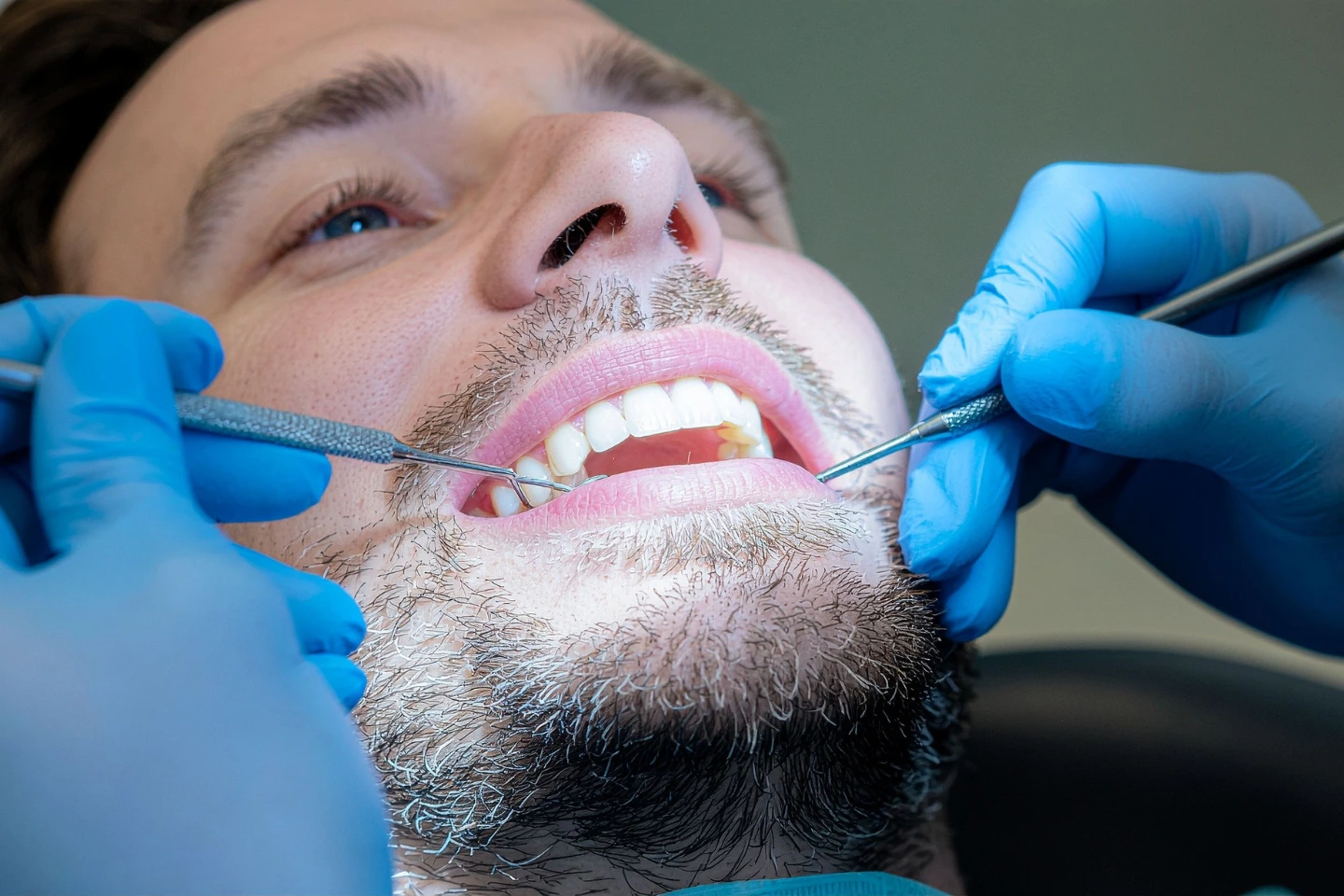
Once we have a clear picture of your dental history and any necessary X-rays, the physical examination begins. This is where your dentist meticulously checks every aspect of your oral cavity.
Checking for Tooth Decay and Damage
The most familiar part of the exam involves checking each tooth for signs of decay. We look for soft spots in the enamel, cracks, or chips that could harbor bacteria. We also examine any existing dental work, such as old fillings or crowns, to ensure they are still intact and protecting your teeth effectively.
Assessing Your Gum Health
Healthy gums are the foundation of a healthy smile. We perform a periodontal screening to check for signs of gingivitis or more advanced gum disease. We measure the space between your teeth and gums, known as pockets. Shallow pockets indicate healthy gums, while deeper pockets can suggest that bacteria are beginning to cause inflammation or bone loss. Catching gum disease early is essential for preventing tooth loss later in life.
Oral Cancer Screening
Your safety is our priority, which is why every examination includes a screening for oral cancer. This is a quick and painless process where we check your tongue, the roof and floor of your mouth, and your throat for any unusual lumps, lesions, or color changes. Early detection is a life saver, and we perform this check as a standard part of our commitment to your total health.
Evaluating Your Bite and Jaw
We also look at how your upper and lower teeth meet. This is known as your occlusion or bite. An improper bite can lead to worn-down teeth, headaches, or TMJ disorders. By assessing your jaw movement and alignment, we can identify if you are grinding your teeth at night or if your jaw joints are under unnecessary stress.
Professional Cleaning and Polishing
After the examination, our skilled hygienist takes over to give your teeth a fresh start. Even with excellent brushing and flossing at home, plaque can harden into tartar, which is impossible to remove with a standard toothbrush.
We use specialized tools to gently scale away this buildup, particularly in those hard-to-reach areas behind your lower front teeth or near the gum line. Once the tartar is gone, we polish your teeth to remove surface stains and leave your enamel feeling smooth. This process not only makes your smile look brighter but also makes it harder for new plaque to stick to your teeth.
Developing Your Personal Dental Roadmap
The final phase of your visit is the most important: the consultation. We sit down with you to discuss our findings. If your mouth is perfectly healthy, we will cheer you on and schedule your next six-month cleaning. If we found an area of concern, we will explain the situation clearly and offer a range of solutions.
We believe in shared decision-making. We will show you your X-rays and use intraoral cameras to show you exactly what we see. Our goal is to provide you with all the information you need to make an informed choice about your care. We do not believe in high-pressure tactics; we believe in providing honest, expert guidance.
Q: Does a dental exam hurt if I have sensitive teeth?
A: We take extra care with sensitive patients. We can use numbing gels or adjust our cleaning techniques to ensure you stay comfortable throughout the process.
Q: How often do I really need to have an exam?
A: For most patients, a visit every six months is ideal. However, if you have a history of gum disease or certain health conditions, we might suggest coming in more frequently to keep things under control.
Q: Will I need X-rays at every single visit?
A: Not necessarily. We determine the frequency of X-rays based on your individual risk factors and dental history. If you are very healthy and have a low risk of decay, we may only need them once every year or two.
Q: Why do you check my neck and jaw during a tooth exam?
A: We check these areas to look for swollen lymph nodes or issues with your jaw joint. It is all part of a comprehensive health check that goes beyond just your teeth.
Take Control of Your Oral Health Today
A dental examination is not just about finding cavities; it is about giving you peace of mind and protecting your long-term health. At Chelmsford Family Dental, we are dedicated to making every visit a positive, informative, and stress-free experience. Whether it has been six months or six years since your last checkup, we are here to help you achieve the healthy smile you deserve without any judgment.
Ready to put your dental worries to rest? Give us a call or visit our website to schedule your comprehensive examination today. Let us help you keep your smile bright and healthy for years to come.


Professional Affiliations & Trusted Partnerships
Proudly affiliated with leading dental organizations, including ADA, MDS, AGD, and Invisalign®, we demonstrate our commitment to excellence, trust, and advanced patient care.



Plan Your Visit!
Taking Care of Your Smile is Just One Click Away!

22 Middlesex St., North Chelmsford, MA 01863
Practice Hours:
Monday-Tuesday → 8:00 AM – 5:00 PM
Wednesday → Closed
Thursday → 8:00 AM – 5:00 PM
Friday → 8:00 AM – 2:00 PM
Saturday → Closed
Sunday → Closed